Insecurity
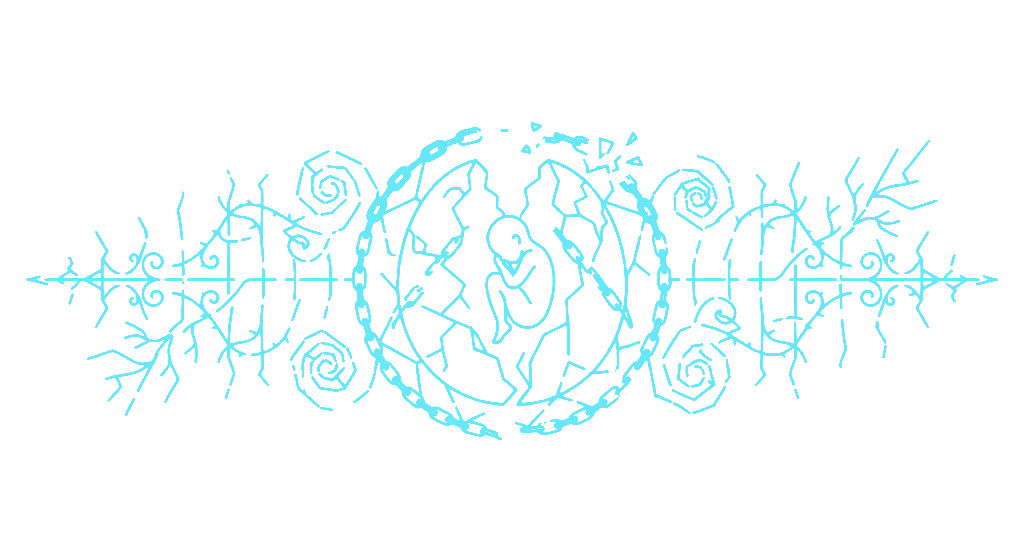
What is insecurity
Insecurity is the feeling of being exposed to the world’s blows. Between you and danger there are no walls, no protector, and no one to rely on.
You stand at the threshold of a room full of strangers, feeling as though your skin has been flayed. This is not a metaphor. Insecurity is not merely an emotion but a mode of existence, one in which you become permeable to every breath from the outside. Every word, glance, silence passes through you, meeting no barrier.
Psychoanalyst Donald Winnicott once observed that an infant does not know where it ends and the mother begins—the world seeps into it whole. Insecurity returns us to that primal state, only now we lack unconditional acceptance. We feel ourselves without a shell, and every step another person takes can graze a raw nerve. This is what makes it so pervasive: it is not localized in a single event but diffused across the entire field of perception.
There is a strange paradox in this feeling. The more you wish to take cover, the more you become convinced there is nowhere to hide. The attempt to find safety in the external—in rules, in approval, in control—only confirms your vulnerability. You begin to seek walls where there are none, and each failure proves: the world is dangerous. But what if this very need for protection is the cause of its absence?
Bodily expression
Insecurity lives in the body not as a scream, but as a tremor. You notice your shoulders are hunched up toward your ears, as if bracing for a blow. Your breath becomes short, shallow — you’re not so much inhaling as sipping air in tiny gulps, as if afraid your lungs might overflow and betray your presence.
The back of your neck goes numb, your palms grow damp, even though it’s cool outside. Inside, there’s a pulsing in your throat, as if a small, frightened heart is beating there. Your stomach clenches, tucked in, ready to retreat into your spine. You’re not standing on your feet — you’re balancing, shifting weight from heel to toe, never daring to claim your space.
The most striking thing is the feeling of being “without skin.” It seems as though any touch would echo with pain, even though no one is touching you. Your body ceases to be a boundary; it becomes a membrane through which the world seeps in unfiltered. You feel every rustle, every movement of air — and this doesn’t sharpen your perception; it drains you.
Psychological aspects
At the core of Insecurity lies a belief rarely spoken aloud: “The world ought to be safe.” It is a deep-seated expectation, the violation of which is perceived as a personal failure. When you fail to find protection, you blame not the circumstances, but yourself: “I couldn’t handle it, I’m not strong enough, I am insecure because I am weak.”
Yet beneath this lies another layer—the illusion that someone can protect you. A parent, a partner, a boss, the state, fate itself—unconsciously, you wait for an external structure to assume responsibility for your peace of mind. When it does not (and it never fully does), you find yourself alone, not only with the threat but also with the disappointment in the one who was supposed to be your shield.
This belief forms a vicious cycle. The more you expect protection from outside, the more acutely you feel its absence. The more you feel its absence, the more convinced you become that the world is dangerous and you are helpless. Breaking this cycle begins not with searching for walls, but with acknowledging that walls are an illusion—and that you will never be “secure” in the sense you have grown accustomed to understanding.
Inner experiences
How it feels:
- You are standing in the center of an empty plain, and from all sides something vague is moving toward you—not enemies, but openness itself.
- Every action you take becomes visible, as if you are under a microscope, and any mistake will be noticed and mocked.
- Inside, there is a draughty emptiness that cannot be filled by food, conversation, or sleep; it simply exists, taut as a string.
- You are constantly looking over your shoulder, checking if danger has drawn nearer, but the danger is not an object—it is the very sensation of an absent barrier.
Inner monologue:
- “Why are they looking at me like that? Did I do something wrong?”
- “If I say something now, they’ll realize I’m an impostor and turn away.”
- “I need to find a place where I can hide, but the moment I leave it, everything will repeat.”
- “Why do others seem so confident, while I feel naked?”
These thoughts are not you—they simply arise, like ripples on the surface of a lake. But when you identify with them, the lake ceases to be water and becomes a trembling unease.
Behavioral manifestations
What others see in you when you feel insecurity often strikes them as strange or even off-putting. You start to slouch, shrink, diminish in size—shoulders forward, head tucked in, gaze gliding across the floor instead of meeting another’s eyes. You speak more softly than usual, and at the end of a sentence, your voice trails into a whisper, as if you’re apologizing for your very existence.
In groups, you seek out the edge of the sofa, a wall, any object that offers even a sliver of cover. You sip water or tea in small, hesitant gulps, hiding your face behind the cup. If you need to say something important, you do it quickly, stumbling over your words, then look away, bracing for a negative reaction. Your walk becomes hesitant—you don’t stride, you creep, as if afraid to draw attention.
Others may interpret this as coldness, aloofness, or even arrogance. They don’t see your inner nakedness—they see strange behavior that stirs in them a desire to step back. You push them away precisely when you most crave closeness.
In relationships with others
Insecurity thrives in an environment where confidence, success, and impenetrability are valued. Modern society is an arena where everyone must demonstrate their “toughness”: a strong stance, a clear opinion, a readiness to compete. Anyone who shows their openness risks being perceived as weak, unreliable, and incapable.
Meanwhile, the social context of insecurity is twofold. On one hand, culture demands a “shell” from you—a professional image, emotional stability, social agility. On the other hand, the very same people who expect confidence from you are themselves deeply insecure inside. This is a collective secret: everyone feels naked, but all pretend to be clad in armor.
In close relationships, insecurity becomes even more acute. You fear that your partner will see your true face and reject you. You oscillate between the desire to be completely open and the fear that this openness will be used against you. As a result, you show only a part of yourself, and that part lives in chronic tension: “Am I good enough?”, “What is he thinking about me right now?”
Evolutionary perspective
Once upon a time, insecurity was not perceived as a problem, but as a natural state of being for humans in the face of gods and nature. In ancient cultures, vulnerability was not a weakness but a given: you are a grain of sand, and you either accept your smallness or try to appease forces greater than yourself.
The Middle Ages brought the idea of protection through social hierarchy. A serf felt secure through his attachment to the land, a knight through his armor and code of honor. Insecurity meant falling out of this structure, becoming an outcast. The Reformation and the Enlightenment began to shift the focus toward individual responsibility: now you yourself had to ensure your safety—through morality, labor, reason. An illusion emerged that if you were smart enough, cautious enough, virtuous enough, you would be shielded from the blows of fate.
Modern culture—of social media, constant comparison, and perfectionism—cultivates a new form of insecurity. You can no longer hide behind the walls of your home; social networks seep into every crevice, displaying the perfect lives of others and your own imperfections in contrast. Security has become a commodity: buy an alarm system, sign up for insurance, take a course on self-esteem. But the more tools you acquire, the more acutely you feel that no external protection brings peace. The evolution of understanding moves from external armor to the realization that the root of insecurity lies not in the absence of walls, but in the belief that walls are necessary.
Insecurity, vulnerability and self-doubt: what's the difference
- Insecurity vs Vulnerability: insecurity is about the absence of walls outside: nowhere to hide, you are open to the world. Vulnerability is about thinness from within: it is easily hurt, even behind walls. One is no armor around; the other is a tender core inside.
- Insecurity vs Self-doubt: self-doubt is about your own abilities: ‘what if I can’t handle it’. Insecurity is about your openness to a blow: ‘I have nowhere to hide, I am naked before the world’. Self-doubt doubts itself; insecurity feels the absence of walls around.
- Insecurity vs Shame: insecurity is the absence of shelter altogether, before any gaze. Shame sets in when the gaze has already been and seen. Insecurity awaits exposure; shame has already been through it.
Opposite: Safety — is “nothing threatens me, I can lean back and exhale”, there are walls around and ground under your feet. Defenselessness is “I am open to all winds, and there is nothing to shelter me”: any threat reaches you directly, and you have to be on guard all the time.
More like this:
Psychological health
When insecurity becomes too much, it turns into a consuming backdrop. A person lives in chronic tension, expecting an attack. They cannot relax, cannot trust, cannot take risks. Any relationship becomes a battlefield, where every step is a test of safety. This is not just anxiety—it is an exhaustion of the soul, where even in a quiet room you feel the walls might collapse.
At the other pole is the person who has completely suppressed their insecurity. They seem impenetrable: self-assured, invulnerable, always knowing what to do. But this is a shell that lets nothing new inside. They cannot be moved, cannot cry, cannot admit weakness. Their “defense” becomes a prison, where they are lonely and incapable of true intimacy.
Health is the ability to stay in contact with it. When you feel your skin has grown thinner, but you do not panic—you simply notice it—you are no longer captive to the emotion. You can say to yourself: “Yes, right now I am vulnerable,” and this admission does not weaken you; it frees you from the need to pretend to be strong.
Historical and cultural context
In Hindu philosophy, insecurity was understood as an inevitable given of samsara—a world where everything is impermanent and nothing offers solid ground. The Upanishads teach: only one who realizes their true nature beyond body and mind can transcend fear. Buddhism went even further, calling all forms of “protection” an illusion—attachment to security leads only to suffering, and releasing this attachment is the path to freedom.
In Christian mysticism, insecurity paradoxically became a path to God. The saints spoke of “spiritual nakedness”—a state where a person sheds all psychological garments and stands defenseless before the Creator; and it is precisely in this absolute openness, not in strength, that one receives grace. John of the Cross described the “dark night of the soul” as a necessary purification in which a person is stripped of all supports and consolations, so that in the emptiness they may encounter the Divine light.
In modern Western culture, by contrast, insecurity is pathologized. It is treated, hidden, regarded as a flaw. The confidence industry thrives: books, trainings, coaches promise to make you “strong” and “invulnerable.” But the more you invest in this image, the further you drift from the truth: human nature knows no impermeability.
In art
Literature
In Hans Christian Andersen’s fairy tale “The Little Match Girl,” each flickering flame becomes the sole barrier between a fragile child’s existence and the icy indifference of the night city. The author masterfully underscores the contrast between the brief, trembling warmth of the sulfur and the endless, indifferent darkness enveloping the heroine. This story lays bare vulnerability as a sensation of absolute openness to a world that has nothing to offer but cold.
Painting
Andrew Wyeth’s “Christina’s World” captures an endless, arid field that becomes an insurmountable distance between a solitary figure and a distant, unattainable house. The muted palette of ochre and gray tones underscores the woman’s vulnerability, as her will to move clashes with the silent, empty expanse of the landscape. Here, defenselessness emerges through the composition. The individual is left alone with a world that offers neither shelter nor an outstretched hand.
Music
Giacomo Puccini’s aria “O mio babbino caro” rings out like a piercing confession, where maidenly tenderness becomes the sole instrument in the struggle for one’s own happiness. The high, pleading soprano notes, soaring above the orchestral accompaniment, convey the sensation of a soul whose fate hinges on another’s will. Within this music resonates that purity of vulnerability, where the only shield left is the sincerity of one’s own desire.
Cinema
François Truffaut’s The 400 Blows captures every step of Antoine Doinel, whose life is gradually stripped of all familiar boundaries of safety, leaving him suspended in the void between school, home, and the street. The final shot, in which the boy runs toward the ocean, becomes a metaphor for his ultimate break from the world of adults, as the camera, frozen on his face, allows the viewer to observe from outside this vulnerable gesture of gaining freedom, turning anxiety for the protagonist into a quiet, detached contemplation.
How to cope with insecurity
What do you do when insecurity strips away your living shell? The first impulse is to find something to take cover in.
-
Realize that vulnerability is not a malfunction, but a conduit. To be honest, any external protection is temporary and illusory. Try stopping and noticing: what if nakedness is not something to fix? What if it is not a threat, but something else: the world’s ability to directly touch your soul?
-
Become a witness, not a prisoner of fear. You can hold this experience as an exploration. What does this tension in your chest feel like? What shape is the fear? Without fleeing, without fighting, you allow it to be. And suddenly you notice: you are not this fear. You are the one who sees it. A tiny gap appears between you and the feeling—that’s where freedom begins.
-
Remove the armor of roles that are no longer needed. You don’t have to put on a brave face and pretend you’re coping. Try to stop feigning invulnerability—it’s in the cracks of this false armor that genuine life seeps through. Strength lies not in standing unshakably, but in allowing yourself to be deeply moved.
I did not go looking for a shield. I began with a question to myself: “Who is truly in danger?” And I saw that the “I” which fears is merely a habitual thought, a construct. And that which lies beyond it needs no armor.
The state of transparency may seem solitary, but it need not be lonely. Sometimes sharing it with another—not as weakness, but as a first step: the one who meets your openness without fear can reflect not vulnerability, but the purity of your soul.